
Owning a home comes with plenty of opportunities to spend money, from routine maintenance and utility bills to major renovations and unexpected repairs. While some expenses are unavoidable, homeowners can make thoughtful decisions about where their money goes. A strategic approach to household spending helps protect a property’s value, prevent costly problems, and make everyday living more comfortable without stretching the budget.
Smart spending does not mean choosing the cheapest option every time. Instead, it means understanding which expenses offer lasting benefits, which projects can wait, and where professional services may help prevent larger bills in the future. With a practical plan, homeowners can balance immediate needs with long-term goals while keeping their finances on track.

Start With a Realistic Homeownership Budget
A successful spending plan begins with a clear understanding of household finances. Homeowners should account for fixed expenses, variable costs, savings goals, and the maintenance needs that come with owning property. Mortgage payments, property taxes, insurance premiums, utilities, and recurring service appointments can add up quickly, making it important to evaluate the full cost of maintaining a home.
Reviewing several months of bank statements and bills can reveal spending patterns that might otherwise go unnoticed. Perhaps utility costs increase during certain seasons, subscription services have accumulated, or frequent takeout meals leave less room for home improvement projects. Identifying these patterns makes it easier to determine where adjustments could free up money.
Once recurring expenses are documented, create separate budget categories for necessities, maintenance, improvements, and discretionary purchases. Assigning each category a realistic spending limit helps prevent a single project from consuming money intended for other priorities.
Homeowners should also distinguish between expected expenses and emergencies. Annual HVAC servicing, for example, can usually be planned in advance, while a sudden plumbing leak may require immediate attention. Keeping these costs in separate categories creates a more flexible budget and reduces the temptation to rely on credit cards whenever an unexpected bill arrives.
Prioritize Maintenance Before Cosmetic Upgrades
Fresh paint, new furniture, and updated fixtures can make a home feel more appealing, but cosmetic improvements should not automatically take priority over essential maintenance. A beautiful room offers limited value if an unnoticed leak is damaging the structure or a deteriorating roof is allowing water inside.
Start by assessing the home’s condition. Look for visible signs of wear, recurring moisture, damaged exterior materials, drainage problems, and equipment that may be nearing the end of its useful life. A seasonal walkthrough can help homeowners identify developing issues before they become expensive emergencies.
Plumbing deserves particular attention because small problems can gradually create significant damage. Slow drains, persistent odors, and recurring blockages may indicate an underlying issue rather than an isolated inconvenience. Consulting a drain cleaning company when warning signs appear can help homeowners identify the cause and determine an appropriate solution before the problem worsens.
Preventive maintenance can also make household spending more predictable. Cleaning appliances, replacing filters according to manufacturer recommendations, inspecting seals around windows, and maintaining outdoor drainage systems may reduce avoidable repairs. These tasks often cost less than addressing the damage that develops when basic maintenance is neglected.
However, homeowners should avoid spending money on every minor imperfection immediately. The goal is to distinguish between problems that affect safety, structural integrity, or essential systems and cosmetic issues that can reasonably wait.

Build a Home Repair and Emergency Fund
Even a carefully maintained property can require unexpected repairs. Appliances fail, plumbing systems develop leaks, severe weather damages exterior materials, and mechanical equipment eventually needs replacement. Without dedicated savings, these expenses can disrupt other financial goals.
A home repair fund provides a financial buffer for these situations. The appropriate amount depends on the property’s age, condition, size, location, and existing systems. An older home with aging plumbing or roofing may require a larger reserve than a newer property with recently updated components.
Rather than waiting until the account is fully funded, start with regular contributions. Automatic transfers after payday can make saving more consistent. Homeowners can also direct part of a tax refund, bonus, or other unexpected income toward the fund when doing so fits their broader financial plan.
It helps to maintain a separate list of anticipated major expenses. A water heater, roof, driveway, or aging appliance may not need replacement immediately, but knowing its approximate remaining lifespan allows homeowners to save gradually instead of scrambling to cover the entire cost.
The repair fund should be reserved for necessary work rather than routine discretionary purchases. If a planned renovation is important, establish a separate savings goal for it. Keeping these funds distinct makes it easier to evaluate whether a project is affordable without compromising the household’s ability to respond to emergencies.
Make Utility Efficiency Part of Your Savings Strategy
Utility bills are recurring expenses, which means even modest savings can accumulate over time. Homeowners can review electricity, heating, cooling, and water consumption to identify opportunities for improvement.
Simple habits can make a difference. Turning off unnecessary lights, sealing air leaks, using programmable thermostat settings, and washing full loads of laundry may help reduce waste. Replacing inefficient lighting or maintaining heating and cooling equipment can also support more consistent energy use.
Before investing in expensive upgrades, determine which changes are likely to deliver meaningful benefits in the home. Adding insulation may be worthwhile in a house with significant heat loss, while replacing a functioning appliance solely to obtain a newer model may not produce enough savings to justify the upfront expense.
Water use is another area to consider. Repairing dripping faucets, addressing running toilets, and choosing efficient fixtures can reduce unnecessary consumption. Homeowners concerned about drinking water quality may also compare filtration options. A reverse osmosis water filter, for instance, can reduce certain dissolved substances, but its suitability depends on the water supply, the contaminants present, installation requirements, and ongoing filter replacement costs.
Compare equipment prices alongside operating expenses. A low-cost product may require frequent replacement parts, while a more expensive option could offer longer service life or lower maintenance requirements. The smartest choice is the one that fits the household’s actual needs and total budget.
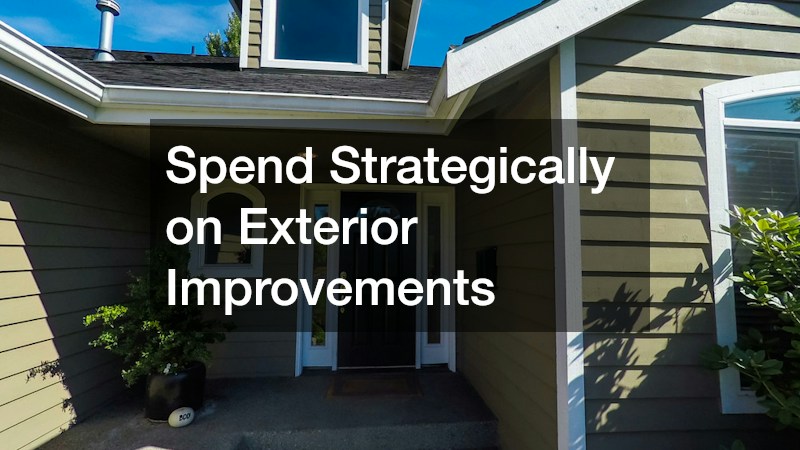
Spend Strategically on Exterior Improvements
A home’s exterior protects the structure from weather and contributes to its appearance. Spending on exterior maintenance can therefore support both the property’s condition and its long-term appeal.
Before planning a major renovation, inspect siding, roofing, gutters, walkways, fences, and drainage areas. Look for loose materials, damaged sections, standing water, and signs that moisture may be reaching vulnerable parts of the building.
Siding is one example of an improvement that requires careful planning. Damaged or deteriorating exterior materials may allow moisture intrusion or reduce the home’s ability to withstand local weather conditions. When replacement is necessary, a professional siding installation service can help homeowners evaluate suitable materials, installation requirements, and expected maintenance needs.
Roofing should also be treated as a functional priority rather than simply an aesthetic feature. Missing shingles, visible deterioration, and recurring leaks warrant timely evaluation. A qualified roofing contractor can inspect the roof’s condition and explain whether a targeted repair or more extensive replacement makes sense. Obtaining multiple detailed estimates can help homeowners compare labor, materials, warranties, and project scope.
Gutters are another important part of exterior maintenance. When clogged or damaged, they may fail to direct rainwater away from the building effectively. Homeowners can compare the costs of routine upkeep with professional support from gutter companies, particularly when a property has multiple stories, difficult access, or recurring drainage issues.
The key is to address the cause of a problem instead of paying repeatedly for temporary fixes. A well-planned exterior project should improve the home’s protection while fitting the household’s financial priorities.
Evaluate Moisture Control and Below-Ground Spaces
Water intrusion can be particularly expensive because damage may remain hidden behind walls, beneath flooring, or inside stored belongings. Basements and crawl spaces deserve regular attention, especially after heavy rainfall or seasonal changes in groundwater conditions.
Warning signs may include persistent dampness, musty odors, visible water stains, peeling finishes, and water pooling near the foundation. Although some moisture problems can be managed through basic drainage improvements, others require a professional assessment to identify the source.
Homeowners experiencing recurring basement moisture may need to compare basement waterproofing services with other possible solutions. Depending on the cause, appropriate work could involve improving exterior drainage, sealing certain entry points, repairing foundation issues, or installing a suitable water management system.
The best investment depends on the underlying problem. Paying for an interior coating will not necessarily solve water that continues to enter through a foundation crack, and a sump pump alone may not correct poor grading around the home.
Ask contractors to explain their proposed solution, the problem it addresses, and any limitations. Written estimates should identify the work included, materials, warranties, and potential additional charges. These details make it easier to compare bids fairly and avoid paying for services that do not address the actual source of moisture.

Protect the Property From Preventable Damage
Some home expenses are easier to manage when homeowners take steps to prevent damage before it occurs. Routine inspections, appropriate storage, and timely professional services can reduce the likelihood of expensive repairs.
Pest prevention is one example. Insects and rodents can damage insulation, wiring, stored goods, and structural materials, depending on the species and extent of an infestation. Keeping food sealed, reducing standing water, closing gaps around entry points, and maintaining a clean property can help reduce opportunities for pests to enter.
When signs of an infestation appear, professional pest control may help identify the species, assess the extent of the problem, and determine suitable treatment options. Homeowners should compare service scope, treatment methods, follow-up visits, and preventive recommendations rather than selecting a provider based on price alone.
Properties with septic systems have their own maintenance requirements. Pumping and inspection schedules vary based on tank size, household occupancy, water use, and system condition. Ignoring warning signs such as slow drains, sewage odors, or unusually wet ground near the drain field can lead to more extensive problems.
Scheduling septic tank cleaning services according to the system’s needs can help homeowners manage maintenance proactively. A qualified provider can advise on the appropriate service interval and identify signs that additional inspection or repairs may be necessary.
Prevention is not a guarantee against every repair, but it can reduce avoidable risks and make household expenses easier to anticipate.
Compare Projects by Long-Term Value
When several home improvements compete for attention, homeowners need a consistent way to decide which project deserves funding first. One useful approach is to compare each project based on urgency, potential consequences of delay, expected lifespan, and total cost.
Safety-related concerns and problems that threaten the building generally deserve priority. A roof leak, faulty electrical component, or significant drainage issue may become more expensive if left unresolved. Cosmetic upgrades, decorative landscaping, and optional furnishings can often wait until the more urgent work is complete.
It is also important to consider how often a product or improvement will need maintenance. Flooring, exterior materials, appliances, and fixtures differ in durability, repairability, and replacement costs. Reviewing these factors before purchasing can prevent a low upfront price from becoming an expensive long-term decision.
For example, homeowners planning additional storage or workspace might compare the costs of modifying an existing garage with constructing a separate outbuilding. Pole barns may suit certain properties and storage needs, but the overall investment can include site preparation, permits, foundation work, utilities, access, and ongoing upkeep. The purchase price alone does not tell the full story.
The same principle applies to smaller purchases. If homeowners are considering paint protection films for a vehicle kept at home, they should evaluate the vehicle’s use, exposure to road debris, installation costs, and expected ownership period. Although this is not a home repair, it illustrates how household-related spending decisions can be judged by practical value rather than appearance or marketing alone.
For every major purchase, ask whether it solves a genuine problem, how long the benefit is likely to last, and whether a less expensive alternative would meet the same need.
Get Better Results From Contractor Estimates
Professional work can represent a substantial portion of a homeowner’s budget, so comparing estimates carefully is essential. A quote should provide enough detail to explain what the contractor will do, which materials are included, and what the homeowner can expect when the job is finished.
Whenever practical, request estimates from multiple qualified providers for the same scope of work. Comparing different proposals is difficult when one includes demolition and disposal while another covers installation only. Ask each contractor to clarify labor, materials, permits, cleanup, warranties, and possible additional charges.
Price should not be the only deciding factor. Verify relevant licensing and insurance requirements, review recent customer feedback, and ask about experience with similar projects. Be cautious of pressure to make an immediate decision, unusually large upfront payment demands, or vague promises that are not reflected in the written agreement.
A detailed contract can help prevent misunderstandings about schedules, payment milestones, and changes to the project. If unexpected work becomes necessary, request an explanation and written approval of the additional cost before proceeding whenever possible.
Homeowners should also consider timing. Scheduling nonurgent work during a less busy period may provide more flexibility, although availability and pricing vary by contractor and location. Regardless of timing, a clear scope of work and a realistic budget are more valuable than rushing into a poorly defined agreement.
Plan Home Improvements Around Your Financial Goals
A home is an important asset, but it should not consume every available dollar. Homeowners also need to consider retirement savings, debt repayment, education costs, transportation, and other family priorities.
Before starting an optional project, determine how it fits into the broader household budget. If the work requires financing, review the interest rate, fees, repayment schedule, and total amount that will be paid over time. A project that appears affordable through monthly payments may cost considerably more once financing charges are included.
It may be wise to divide projects into stages. Instead of renovating an entire kitchen at once, homeowners might first address damaged plumbing, then save for cabinets, and later update finishes. Phasing a project can make expenses more manageable, provided the sequence does not create extra labor costs or leave essential work incomplete.
Track spending as the project progresses. Record estimates, approved changes, receipts, and payments in a spreadsheet or budgeting app. Compare actual costs with the original plan and adjust discretionary spending when necessary.
Finally, leave room for uncertainty. Renovations sometimes uncover concealed damage or other conditions that could not be identified before work began. A contingency allowance can help cover reasonable surprises without draining emergency savings or forcing homeowners to abandon essential work halfway through.
Smart homeownership spending is about making informed choices that protect a property, support household comfort, and preserve financial flexibility. By budgeting realistically, prioritizing preventive maintenance, saving for emergencies, comparing contractors, and evaluating long-term value, homeowners can make their money work harder without treating every improvement as an immediate necessity.
The most effective plan is one that reflects the property’s actual condition and the household’s financial goals. Review expenses regularly, address important problems promptly, and save for optional upgrades before committing to them. With a thoughtful approach, homeowners can maintain their properties, reduce avoidable costs, and build a more sustainable foundation for the years ahead.